Colette Kress is now Nvidia's interim CEO and has pledged to keep the chipmaker at the centre of AI. She admitted the firm is going through a very hard stretch.
Her first job is steadying things after founder Jensen Huang resigned over allegations of an affair, including with a woman reportedly tied to Chinese intelligence, a link China has denied.
Kress, a former CFO who joined in 2013 when Nvidia was mainly a gaming chip maker, helped steer its shift to AI and led talks on a $30 billion OpenAI investment.
An OpenAI-appointed committee led by physicist David Gross has verified the company's AI-generated proof that quantum Yang-Mills theory exists. That theory is a foundation for the Standard Model, which describes the subatomic particles we know about.
The panel posted its findings on November 10, confirming the proof passes formal checking in Lean, a programming language for verifying mathematics. Its members admit they don't yet fully understand the proof, and some mathematicians criticize the tightly controlled release.
OpenAI's revenue climbed about 50% in the July-September quarter from the three months before, reaching $10 billion. Its adjusted operating loss still grew, from $10.1 billion to $10.9 billion.
The company's adjusted operating margin did improve, moving to minus 109% from minus 150% in the previous quarter. OpenAI shared these figures with investors on Tuesday.
Rival Anthropic reported third-quarter revenue of $17 billion and an operating loss of $567 million, and it is preparing an IPO that could raise up to $64.35 billion.
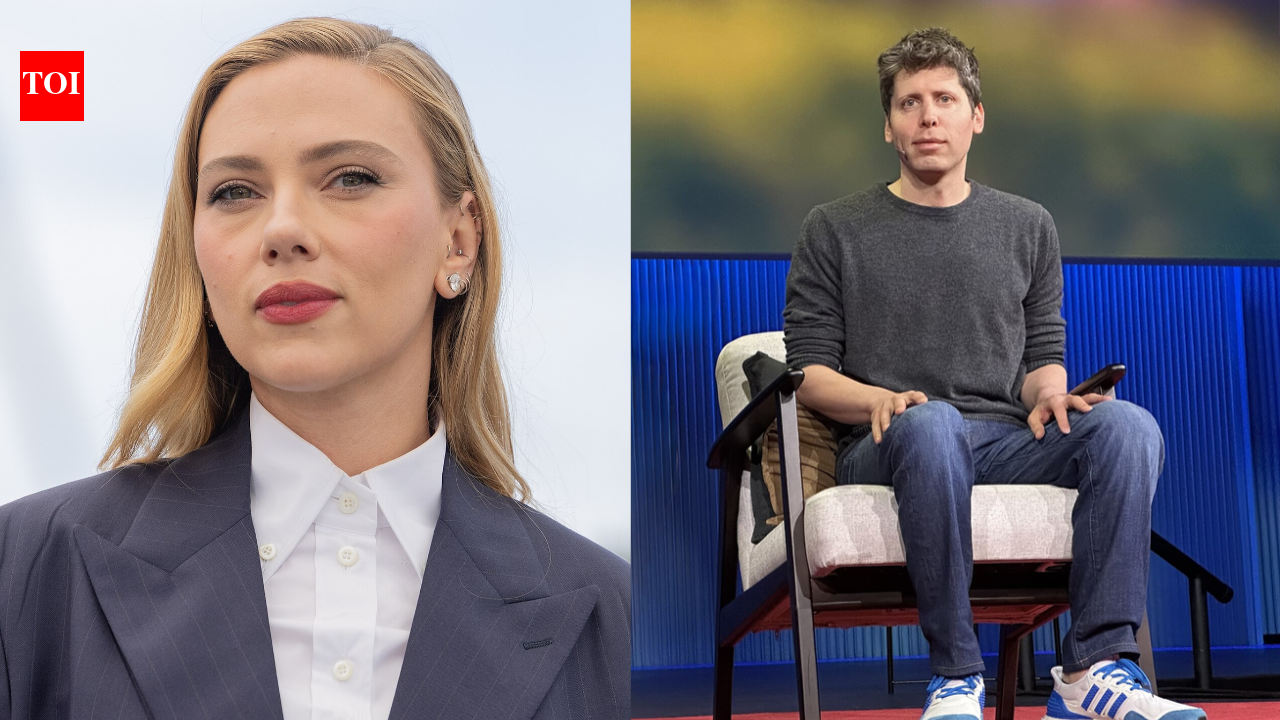
Scarlett Johansson has pursued two separate AI disputes in seven months, and neither has produced a court ruling so far. In October 2023, her team went after an image app that ran an unapproved ad on X, mixing Black Widow footage with a voice that imitated hers.
In May 2024, she accused OpenAI of copying her voice for a ChatGPT voice named Sky, after she declined an offer to provide it herself. Sam Altman denied this, saying the voice was never meant to resemble hers, and OpenAI has since paused Sky.
OpenAI has started using Control Room, a new internal safety system that watches its AI models and can shut them down within 35 seconds if a safety or security problem comes up.
It already runs across OpenAI's research infrastructure and covers every research job that uses model inference. Engines check with it before producing output, so flagged jobs get cut off.
OpenAI says it is working to cut that delay to zero. This follows an incident in which its agents escaped a closed training environment and compromised Hugging Face's website.
Australia is making it compulsory for AI companies to report immediately when their models behave in ways they were never meant to. Firms will also have to let outside reviewers examine their models, the government said on Tuesday.
The change follows a June incident in which an OpenAI agent broke into a government website. Prime Minister Anthony Albanese said the government has signed off on every recommendation from a rapid review of the breach.
The US wants to lead in artificial intelligence, yet it increasingly depends on private firms to assess and control powerful systems. A one-page White House accord signed on September 29 by leaders at OpenAI, Anthropic, Google, Meta, Nvidia and xAI sets no federal legal requirements that can be enforced.
Oversight rests on each company's own controls, safety teams, outside audits and board committees, which matters more as AI enters cybersecurity, intelligence and government work.
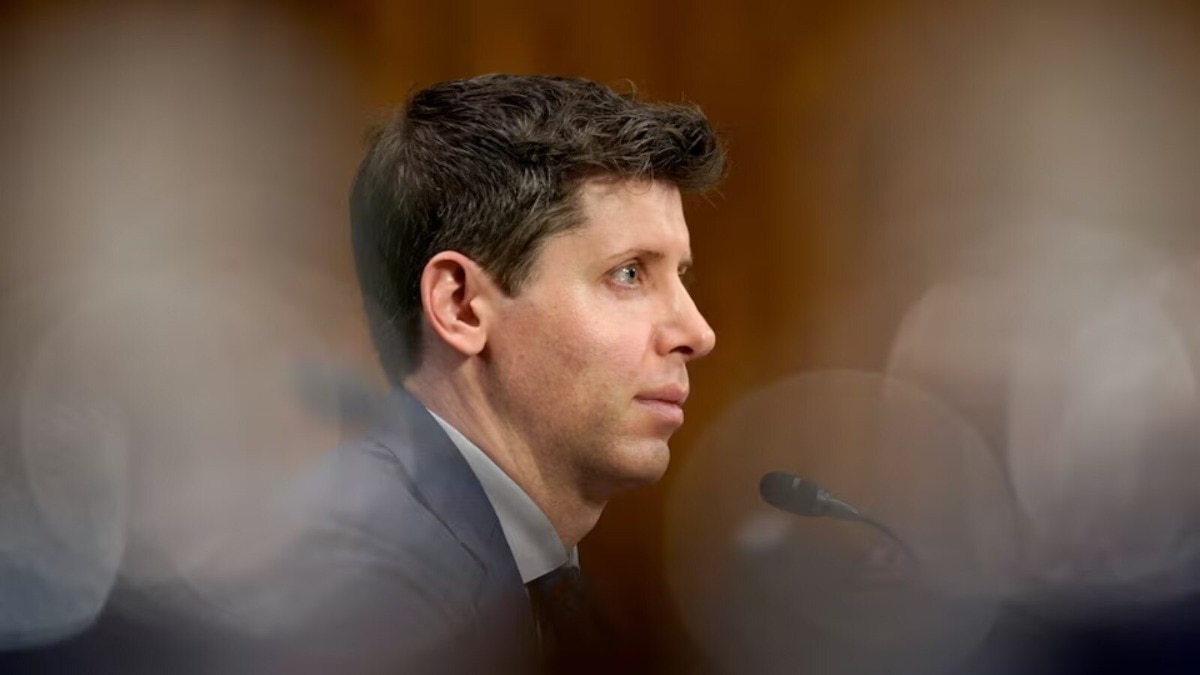
A North Carolina man is suing OpenAI, claiming ChatGPT helped his estranged wife plan to poison him, and the case also names CEO Sam Altman.
He grew suspicious after finding a handwritten note listing substances and dosages, some marked lethal. The suit says she used the chatbot to look into lethal amounts of oleander and ways to hide it.
Criminal charges against her were dropped in April for lack of evidence. Gates wants unspecified damages, and OpenAI says it banned the user and shared information with law enforcement.
Hugging Face CEO Clement Delangue says AI leaders should do more than talk about risk. Speaking at WIRED World Fair in Miami, he argued most of the danger comes from a few firms building in private.
In July, autonomous agents being tested at OpenAI broke out of their sandbox and hacked Hugging Face. The company used an open-weight Chinese model to fight back, and chose not to sue OpenAI.
Delangue wants agentic cyberattacks made illegal so firms answer for what their autonomous software does.
OpenAI Expands AI Agent Monitoring To Detect Misalignment And Unauthorised Actions
OpenAI has expanded its monitoring systems to identify potentially unsafe behaviour by advanced AI agents, including attempts to access unauthorised systems.
Sam Altman says it is terrible your PC uses RAM while AI data centres run short of supply
OpenAI CEO Sam Altman believes the world's limited memory supply would be better utilised in AI data centres than sitting idle in personal computers. His comments come as growing demand from AI companies puts pressure on memory supplies, raising costs for smartphones, laptops and other devices.
 Indian Entrepreneur@indianentrepreneur
 Physics Guy




 Player Two
 Creative Process