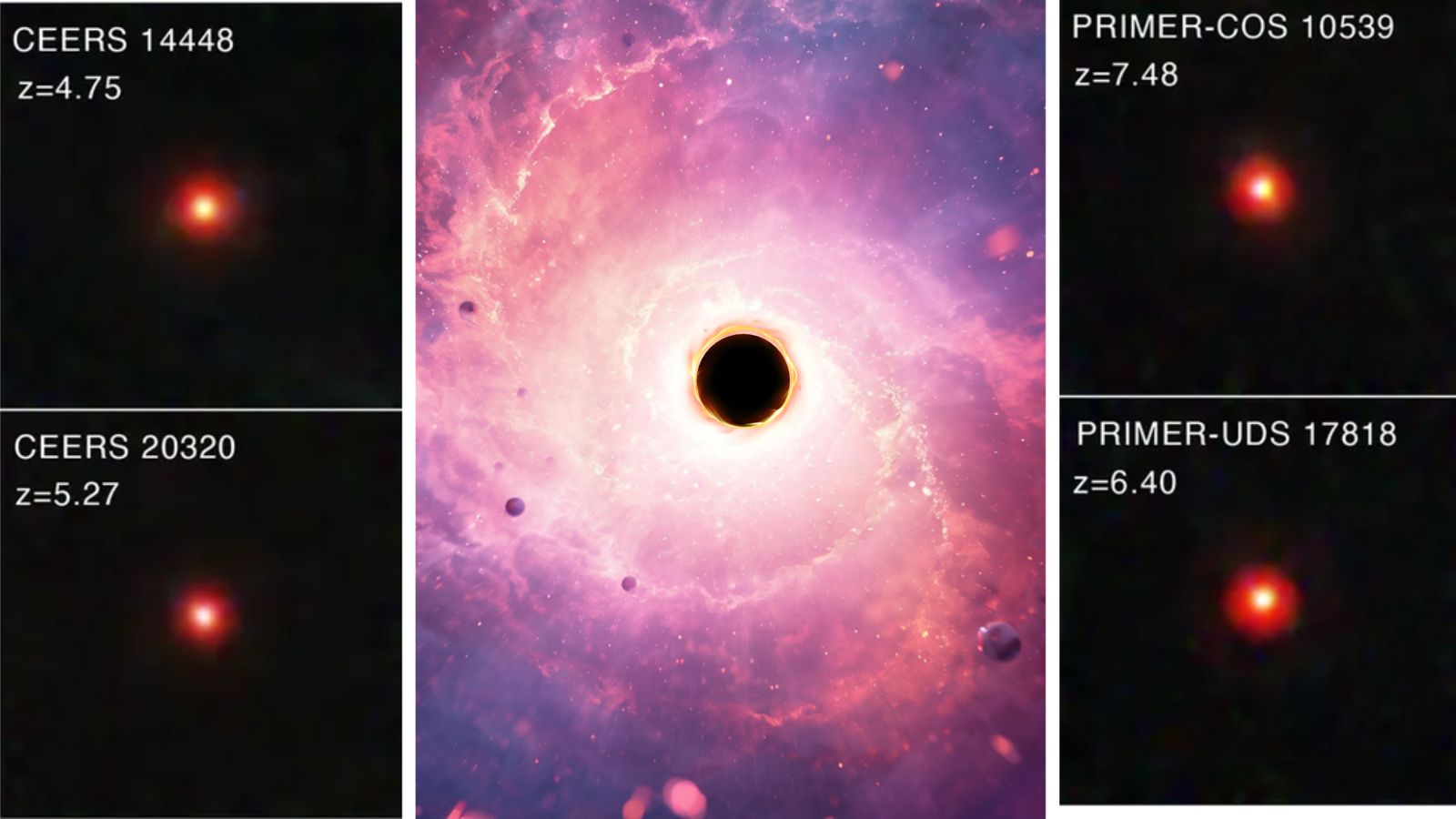
Some of the mysterious Little Red Dots seen by the James Webb Space Telescope may be primordial black holes, born just after the Big Bang. Researchers tested this idea on one of them, QSO1, whose light left it when the universe was about 700 million years old.
QSO1 is made almost entirely of hydrogen and helium, which may make it more pristine than others. Their modeling found the most likely scenario is a small primordial black hole that slowly grew by consuming nearby gas.
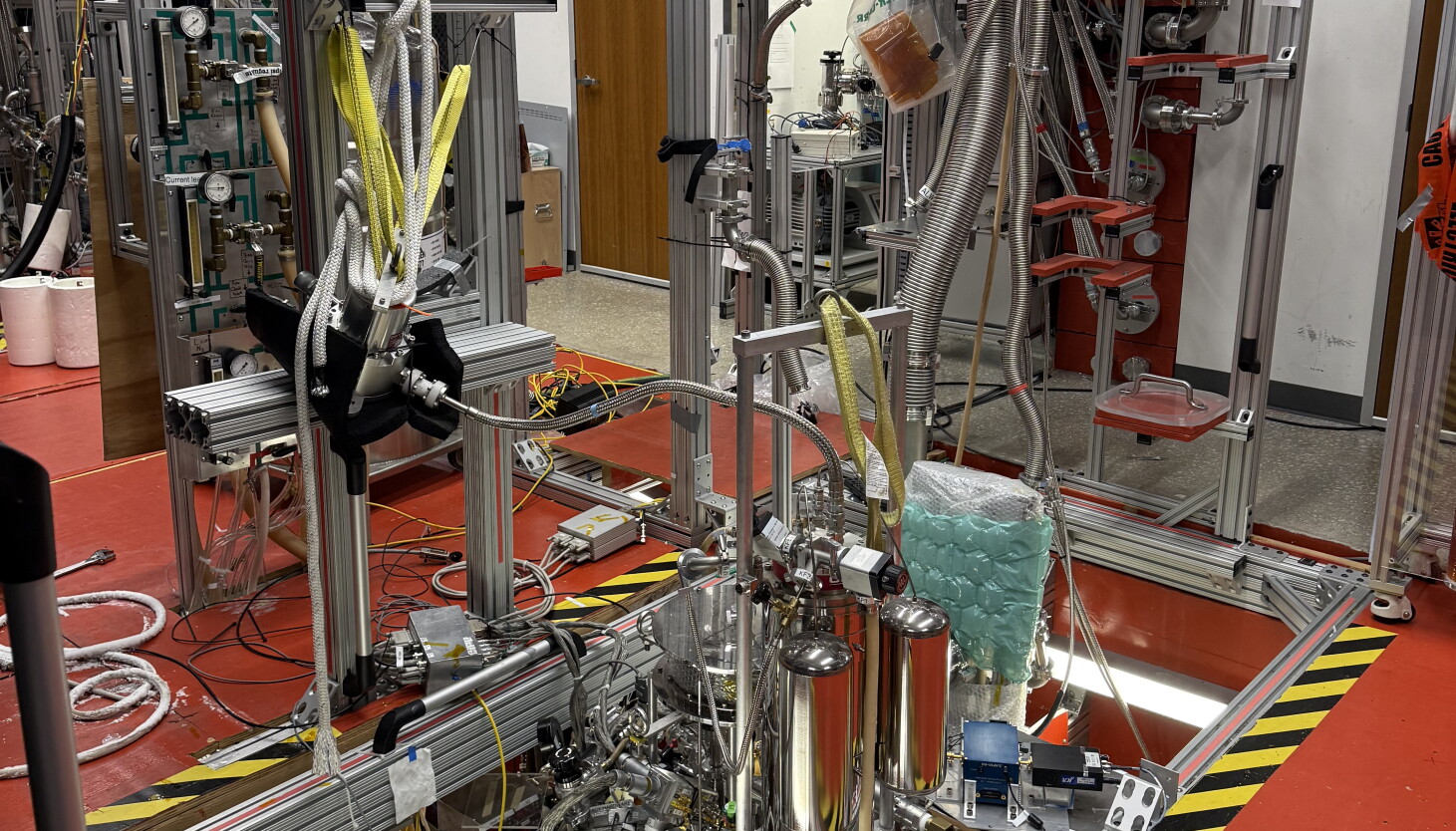
Northwestern University physicists have trapped a single positron, the antimatter twin of the electron, for months. They used electric and magnetic fields to freeze it in place.
Antimatter vanishes on contact with ordinary matter, so the team built a wall-free trap from batteries and magnets. Comparing the positron's magnetic properties with an electron's could expose a flaw in the Standard Model.
The team hopes the results will help solve a puzzle: the Big Bang should have made equal amounts of matter and antimatter.
 Astronomy Today@astronomytoday
 Physics Guy