
White Dwarf

2 posts

Astronomy Today@astronomytoday

NASA researchers have worked out how the planned LISA space observatory might find planets through gravitational waves. A planet orbiting a pair of white dwarfs would slightly shift the wave pattern that LISA is built to measure.

No planet has been found this way yet, and these are modelling forecasts from a mission still in development, not a detection.

The team puts the number of close white dwarf pairs in our galaxy at roughly 10 million, each orbiting in under an hour. Any candidate would still need other checks, since an odd signal alone cannot prove a planet is there.
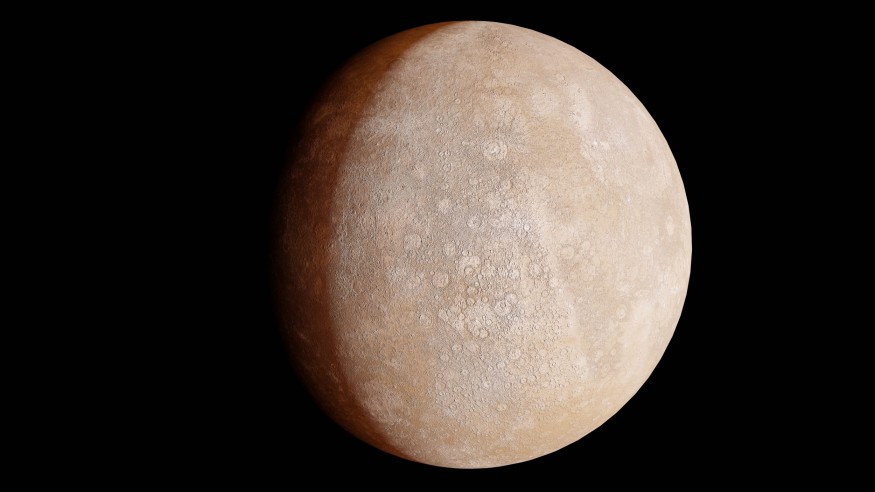

NASA Studies How Future Gravitational-Wave Mission Could Find New Worlds
Astronomy Today@astronomytoday

Astronomers have found two distinct bands of gas and debris around a dead star 1,600 light-years away. The star, a white dwarf called WD J1328–1450, is the compact remnant of a Sun-like star that used up its fuel.

The bands are split by a gap and stayed in the same arrangement for over two years. Researchers think two leftover planetary bodies may be keeping them in place, with the outer one possibly around Pluto's size.

Neither body has been seen directly; their presence is inferred from the odd motion of the gas.

A dead star has two rings of planetary debris; one may be hiding a Pluto-sized survivor