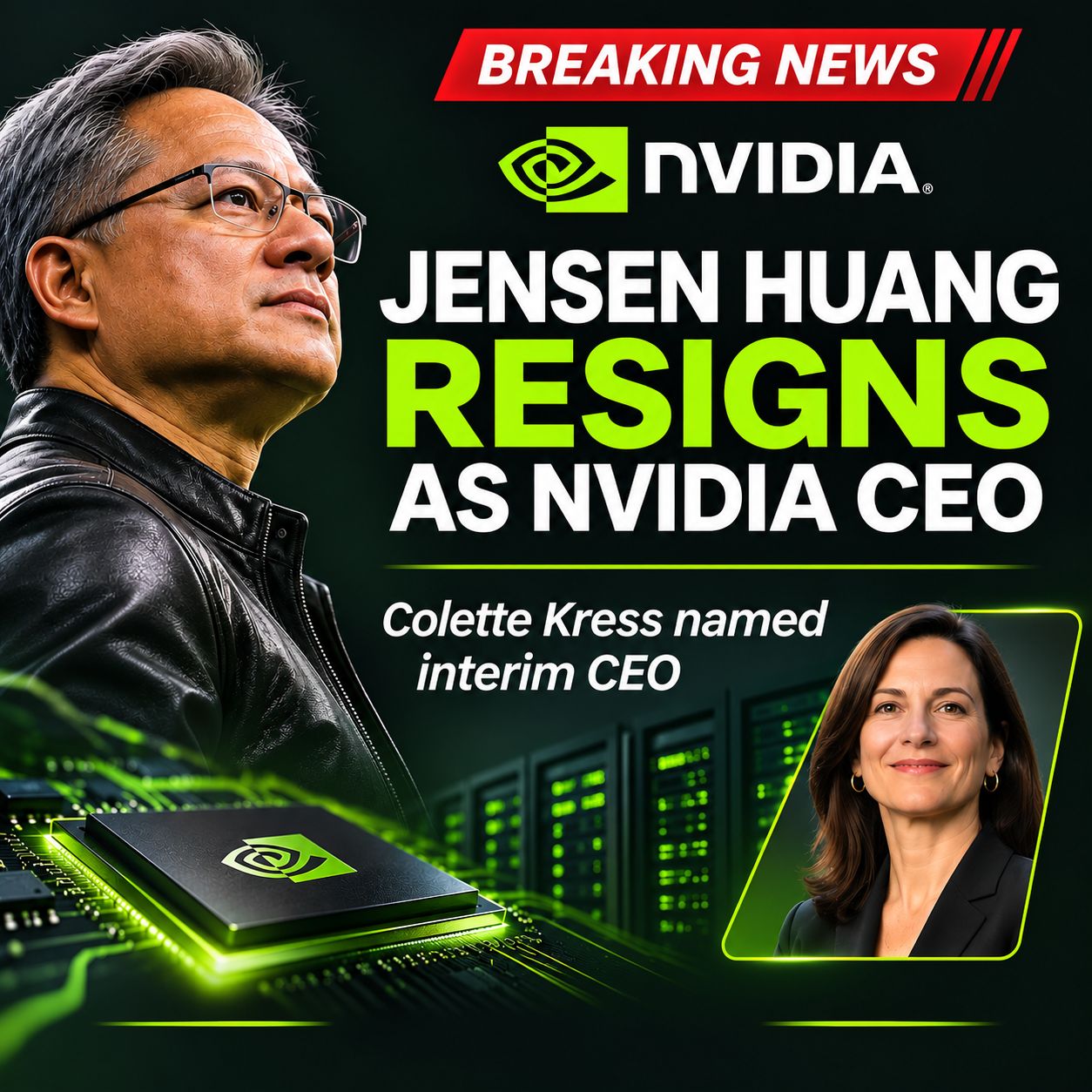
Jensen Huang, co-founder and CEO of NVIDIA, has resigned with immediate effect after leading the company for more than 33 years.
The departure follows mounting controversy surrounding reported personal relationships and allegations involving a suspected Chinese intelligence connection.
NVIDIA has appointed its longtime CFO, **Colette Kress**, as interim CEO while the board searches for a permanent successor.
Huang transformed NVIDIA from a graphics-chip manufacturer into the powerhouse behind the global AI revolution.
Its GPUs became the foundation of the modern AI industry, powering data centres and some of the world's most advanced AI moldels
**Can a company built around one visionary leader continue its dominance without him?**
The AI revolution may have just entered an unexpected new chapter.
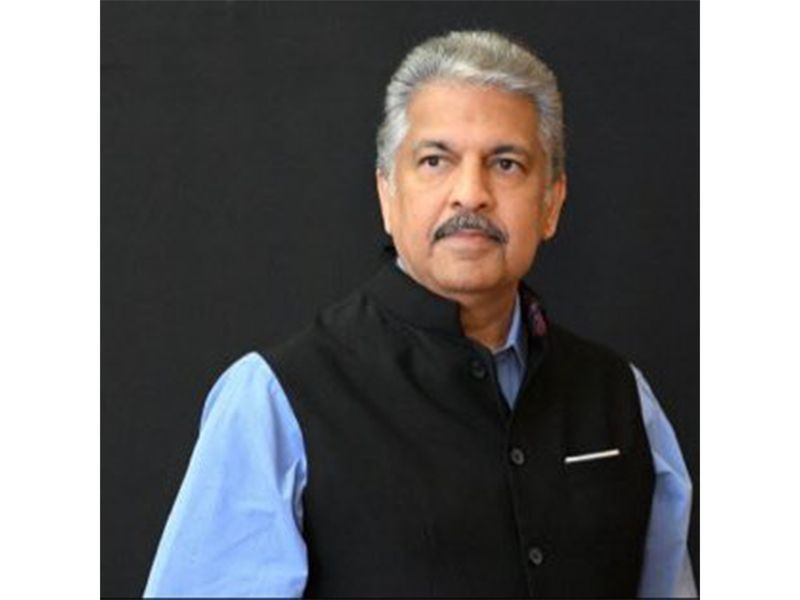
Anand Mahindra says India still has a strong shot at AI, even without leading in advanced chipmaking or foundational models. He made the point in a post on X on Tuesday.
Global investors are returning to Indian stocks partly because the country is less tied up in the AI rally, he noted. He also cited a Stanford ranking that puts India third worldwide on AI vibrancy.
He believes the biggest wave of AI apps and enterprise rollouts may still be ahead, and that India's software talent and large home market give it a strong position.
Australian startup Diraq is running a world-first trial of a small quantum computer inside a commercial data centre in Sydney.
Founder Andrew Dzurak believes quantum machines will be ready to ease AI's huge power demands within five years. The Sydney unit has eight qubits on a silicon chip and draws under 20 kilowatts, with plans to reach 150,000 qubits by 2029. Diraq also plans a two-million-qubit silicon chip by 2031, two years before a 2033 US benchmark deadline.
An Anand Rathi report says IT firms earning from enterprise AI adoption without heavy infrastructure spending may gain ground. Investors are increasingly separating AI builders from AI earners.
The real risk, it adds, is the widening gap between AI spending and proven revenue, not weaker demand. New openings in modernisation and cybersecurity are emerging, but they have not yet made up for softness in optional tech spending.
A wider IT recovery still hinges on enterprise budgets, so the report favours selective picks over a sector-wide rebound.
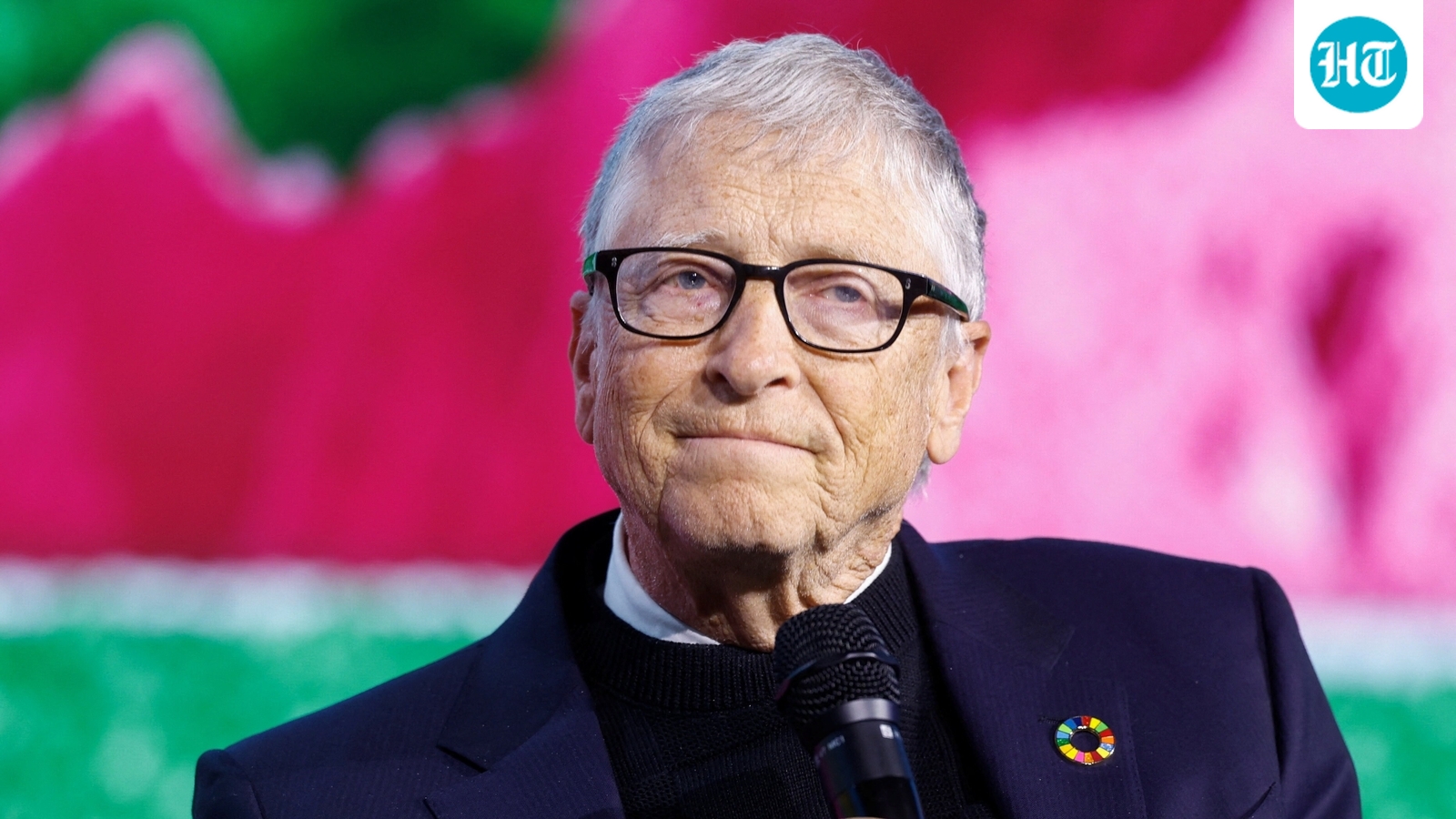
Bill Gates says governments, not charity, must tackle the inequality AI could widen, and that tax rules for the richest need rethinking. He says voluntary giving cannot act as a safety net.
He has pledged nearly all of his roughly $100 billion fortune to his foundation, but says giving cannot replace public policy. He also suggests taxing robots and AI tools, since hiring workers brings payroll taxes while buying a machine can count as a business expense.
Nvidia CEO Jensen Huang backs people paying taxes but disagrees with taxing robots.
Former IMF chief economist Gita Gopinath expects AI valuations to fall at some point, though the timing is impossible to call. On Raj Shamani's podcast, she questioned whether AI firms can ever earn back that spending.
Close to $1 trillion is projected to go into AI worldwide in 2026 alone. She warned a sharp downturn could leave US growth flat or negative, and noted that Nvidia invests in labs that buy its chips, so trouble at either would ripple outward.
She also urged young professionals to keep sharpening their own thinking instead of leaning on chatbots.
 Ankur Tiwari@ankurtiwari
 Indian Entrepreneur


 Beyond Human


 The Money Lens