Physicists at the Large Hadron Collider are seeing fewer 'penguin' decays of B mesons than the Standard Model predicts, plus an odd pattern in the directions the particles travel.
The team studied about 650 billion B meson decays. The result falls short of discovery level, and part of it may come from hard-to-predict 'charming penguin' effects. A separate analysis at the CMS detector hints at a similar result.
Imperial College's Mark Smith says explaining penguin decays could also point towards dark matter, and expects the question to be settled within 5 to 10 years.
A team at Shanxi University in China says it has found a way around the Heisenberg uncertainty principle, which limits how precisely paired properties like position and momentum can be known.
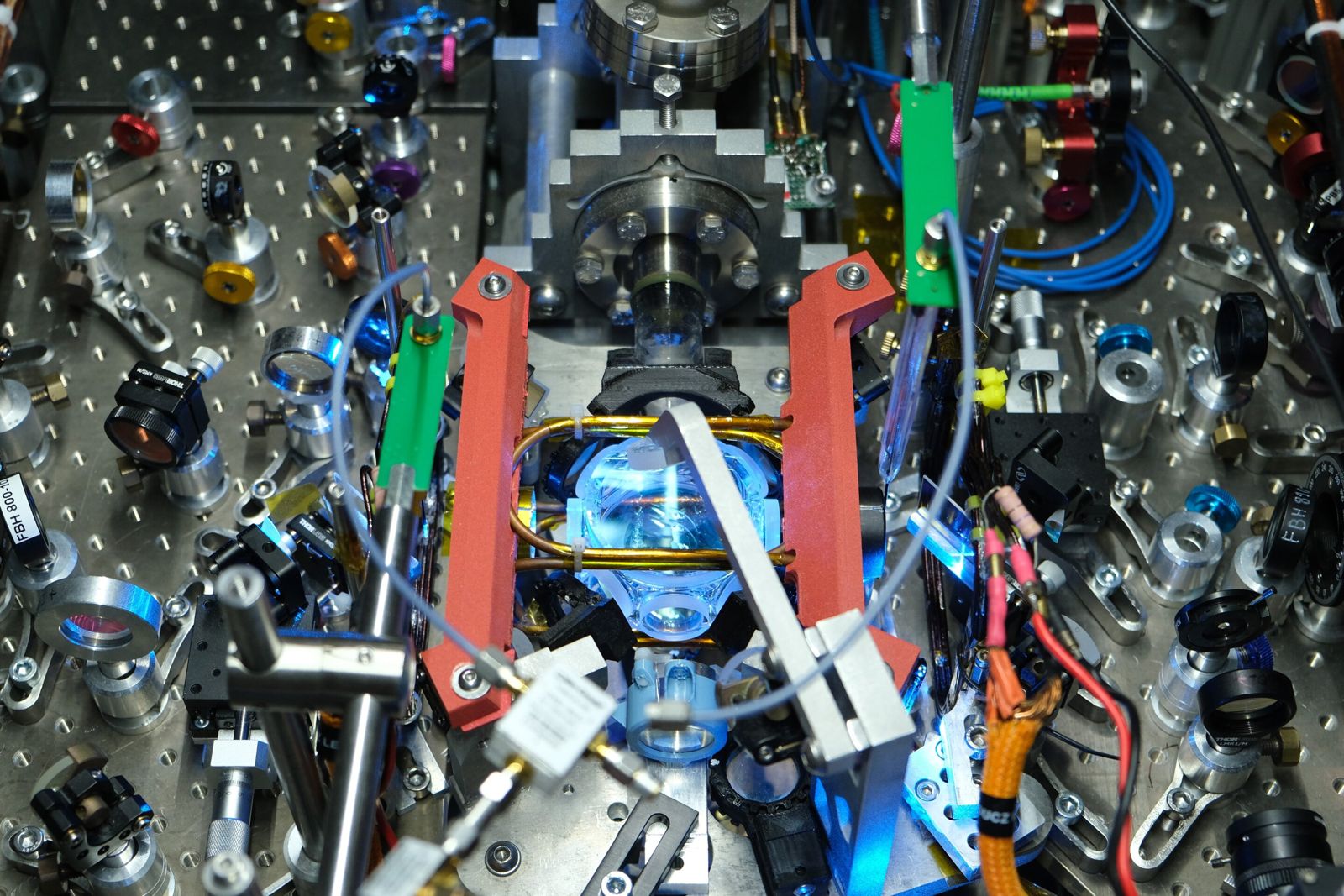
Rather than predicting the future, they combined data from before and after each measured moment. Using 52 billion rubidium atoms in a small glass chamber, they got results about 20 percent more precise than the limit allows.
The work is a preprint and has not yet been peer-reviewed. Heisenberg's limit still holds, but the approach gets around it to some extent.
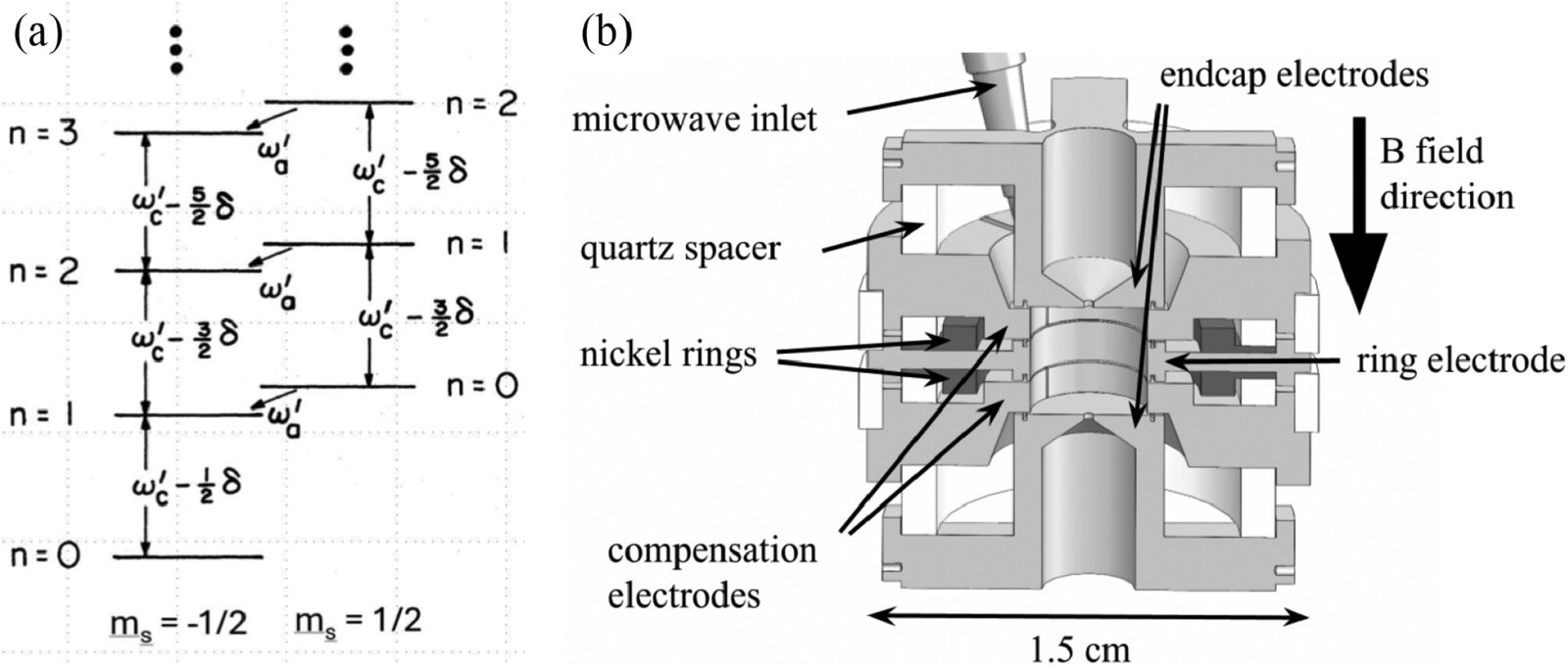
A one-positron cyclotron could put a core Standard Model prediction to the test.
Positrons, antimatter versions of electrons, act like tiny magnets, and the model expects their magnetism to match the electron's in strength but reverse in sign.
Researchers have proposed a lab-scale quantum sensor to measure frame dragging from Earth's rotation. If built, it could match the 0.2% precision of the best satellite measurements in about 35 minutes.
The device would use a loop of superfluid helium-4 with a thin, perforated barrier. Earth's rotation would shift the rate at which the helium sloshes, and that shift is what gets measured.
The barrier is the hurdle, since its holes must be about 1 nanometer wide. Such materials are still in development, so no working sensor exists yet.
An OpenAI-appointed committee led by physicist David Gross has verified the company's AI-generated proof that quantum Yang-Mills theory exists. That theory is a foundation for the Standard Model, which describes the subatomic particles we know about.
The panel posted its findings on November 10, confirming the proof passes formal checking in Lean, a programming language for verifying mathematics. Its members admit they don't yet fully understand the proof, and some mathematicians criticize the tightly controlled release.